
Which Green Arrow Character Are You?
This quiz measures how you behave when a masked rescue turns into a question of loyalty, grief, and who gets protected first. Answer as you would act in the Green Arrow world, and you will be matched with the character whose pressures most resemble yours.

About Green Arrow
Green Arrow is a long-running DC superhero comic book that began in 1941 and remains active, with thousands of catalogued stories. Its cast centers on Oliver Queen as Green Arrow and reaches through Roy Harper’s Speedy, Dinah Lance’s Black Canary, Connor Hawke, and frequent DC guests such as Batman, Green Lantern, and Superman. The reference presents a world of masked duty, family ties, wards, parents, and allies who arrive when trouble outgrows one archer.
How this quiz works
Answer 10 questions. There are no right or wrong answers — each choice adds points, and the result you get is the one your answers point to most.
10 questions · 8 possible results · about 3 minutes
Start the quizOne question at a time. Nothing is saved, and you can start over whenever you like.
Meet the characters from Green Arrow
Every result below is a real ending of this quiz — read them before or after you play.

Green Arrow (Oliver Queen)
Green Arrow (Oliver Queen) is the central figure of the Green Arrow cast, present from 1941 onward. The reference ties him to Roy Harper as a former guardian, to Dinah Laurel Lance as a love interest, and to Connor Hawke, Tak “Robert” Tomonago, and Mia Dearden through parenthood or adoption.
He is a hero whose name gathers duties around it. You are the person who takes the roof nobody else wants, not because it is dramatic, but because it gives you sightlines. When people argue, you assign exits, check who is bleeding, and decide which promise has to be kept first. You do not leave a younger ally to prove a point alone, and you tend to treat family trouble as operational reality rather than private background noise. This fits Green Arrow (Oliver Queen) because the reference places him at the center of guardianship, romance, children, and adopted responsibility. Your strength is that you notice how many people are attached to a decision before you loose it into the night. The warning is control. You can call it protection while quietly removing other people’s say in their own risks, and eventually someone you meant to shield may feel managed instead of trusted.

Speedy
Speedy is Roy Harper, one of the earliest and most recognizable Green Arrow figures in the reference. He is listed as Oliver Queen’s legal ward and as the father of Lian Harper with Jade Nguyen.
His position puts him close to mentorship, inheritance, and the pressure of being taken seriously while still being understood through someone else’s protection. You move before the senior heroes finish turning concern into a committee. If there is a stairwell to block, a frightened child to carry, or a wounded partner insisting on another round, you get your hands on the problem. You accept help, but you dislike being handled. The fastest way to make you reckless is to tell you that your place has already been decided for you. This result fits Speedy because Roy Harper’s place in the reference is built through wardship and later parenthood: being protected, then becoming responsible for someone else. That produces your best habit, which is refusing to treat youth or dependency as uselessness. The downside is the hunger to prove the point every time. You may turn a sensible retreat into a personal trial, and the people who care about you then have to rescue both the mission and your pride.

Black Canary (Dinah Lance)
Black Canary (Dinah Lance) appears in the Green Arrow reference as Dinah Lance, daughter of Larry Lance and Dinah Drake Lance, the original Black Canary. She is also connected to Oliver Queen as a love interest.
Her entry brings lineage and personal attachment into the same room as superhero work, making her a figure shaped by inherited names and chosen bonds. You step into the middle before the argument becomes the disaster. You ask who is hurt, who is lying to spare someone, and who is using urgency as an excuse to stop listening. In a rescue, you keep your body where frightened people can see a human face rather than only masks. When someone powerful starts promising too much, you make the promise smaller and more honest. This fits Black Canary (Dinah Lance) because the reference gives her both a family line and a close tie to Oliver Queen. You operate well when history is present but not allowed to run the room. The warning is that inherited pressure can sharpen every slight. You may hear doubt as disrespect, or treat a confused ally as another person asking you to justify your place. That makes your judgment harder than it needs to be.

Green Arrow (Connor Hawke)
Green Arrow (Connor Hawke) is listed as a main supporting character who first appears in 1994. The reference also identifies Oliver Queen as Connor Hawke’s father with Sandra Moonday Hawke, linking Connor to the Green Arrow name through family as well as the shared hero identity.
His position is that of a later bearer of a very public mantle. You arrive after the room already has legends on the wall, debts in the air, and people expecting you to choose between imitation and rejection. You do neither. You listen for the task that is being neglected because everyone is arguing about history, then take it. You are willing to be underestimated if that buys you a cleaner path to the person who actually needs help. This result fits Green Arrow (Connor Hawke) because his very name in the reference carries succession: another Green Arrow, connected to Oliver Queen as a son. Your gift is moving inside a legacy without treating it as a cage. The downside is overcorrection. You may become so careful not to repeat someone else’s mistakes that you hesitate when action is needed, or you may hide your own anger behind restraint until nobody knows where you truly stand.

Batman
Batman is Bruce Wayne, a major DC figure who appears in the Green Arrow cast as a guest. The reference gives his defining origin: Thomas and Martha Wayne were murdered in a Gotham City alley before their young son, and Bruce swore on their graves to avenge them.
He brings Gotham’s severity and a vow-shaped method into another hero’s orbit. You start at the edge of the scene and count what does not fit. Which window stayed dark, which witness avoided the obvious lie, which escape route was chosen too neatly. You do not need to be liked while the danger is active. If someone demands trust before giving facts, you let silence do the unpleasant work until the facts appear or the person makes a mistake. This fits Batman because the reference grounds Bruce Wayne in a specific loss and a sworn response to it. You treat crisis as something that has already punished carelessness, so you prepare harder than anyone wants. The warning is that a vow can become a locked room. Suspicion may keep you alive, but it can also make allies feel like suspects on probation, and grief turned into procedure is still grief.

Green Lantern (Hal Jordan)
Green Lantern (Hal Jordan) appears in the reference as a main character with cameo status in Green Arrow, first appearing in 1959. Even with limited biographical detail supplied, his entry marks a connection to the broader DC superhero field beyond Oliver Queen’s immediate circle.
He is one of the outside powers who can shift the scale of a crisis when he arrives. You look for the largest danger first, then work backward to the people standing under it. When a harbor, skyline, or crowd is too wide for one masked crew, you volunteer for the far reach. You are comfortable leaving the family argument to others if the night is about to become bigger than anyone’s pride. You send one clear message, move, and expect others to keep pace. This fits Green Lantern (Hal Jordan) because his role in the reference is that of a recognizable main DC hero appearing at the edge of Green Arrow’s concerns. You bring scale, speed, and outside perspective when local loyalties are snarled. The downside is distance. You may treat intimate damage as tactical clutter, and the people left on the ground can experience your efficiency as absence rather than help.

Superman
Superman is Clark Kent, also Kal-El, whose reference entry begins with Krypton’s destruction. Jor-El and Lara placed their toddler son in a small craft before the planet exploded, sending him into the future life connected to Earth.
In the Green Arrow cast he appears as a supporting cameo, bringing an origin of exile, survival, and extraordinary obligation into the field. You go where fear is making people careless and make the first visible act simple: lift the beam, open the door, carry the stranger, tell the child what is true without decorating it. You do not enjoy speeches about hope, but you understand that panic needs something sturdier than cleverness. If someone must stand in open sight to draw danger away, you do it before asking who is watching. This fits Superman because the reference begins him with catastrophe on Krypton and a child sent away so life can continue. You carry that shape in your answers: disaster first, rescue next, meaning later. The warning is that constant rescue can become a trap. You may make yourself indispensable and then resent needing rest, or assume that being able to bear more means you are not allowed to be held.

Green Lantern (Kyle Rayner)
Green Lantern (Kyle Rayner) is listed as a supporting guest in the Green Arrow reference and first appears in 1994. His entry shares the Green Lantern name with Hal Jordan while occupying a different place in the cast table.
That makes him useful here as the character for readers who enter a dangerous situation from the side and still have to matter. You take the odd corner of the crisis: the second signal, the side street, the uneasy witness nobody else has time to read. You are not offended when the famous names draw the crowd’s attention. That leaves you free to test the uncertain shape at the edge of the sky and report what is actually changing. You help best when the job is real but not yet fully defined. This fits Green Lantern (Kyle Rayner) because the reference presents him as a guesting Green Lantern rather than the central Green Arrow figure. You are comfortable being additional without being decorative, which is rarer than it sounds. The warning is detachment. If you always remain the flexible outsider, you may avoid the tedious work of being accountable after the spectacular part ends, leaving other people to repair trust.
More like this
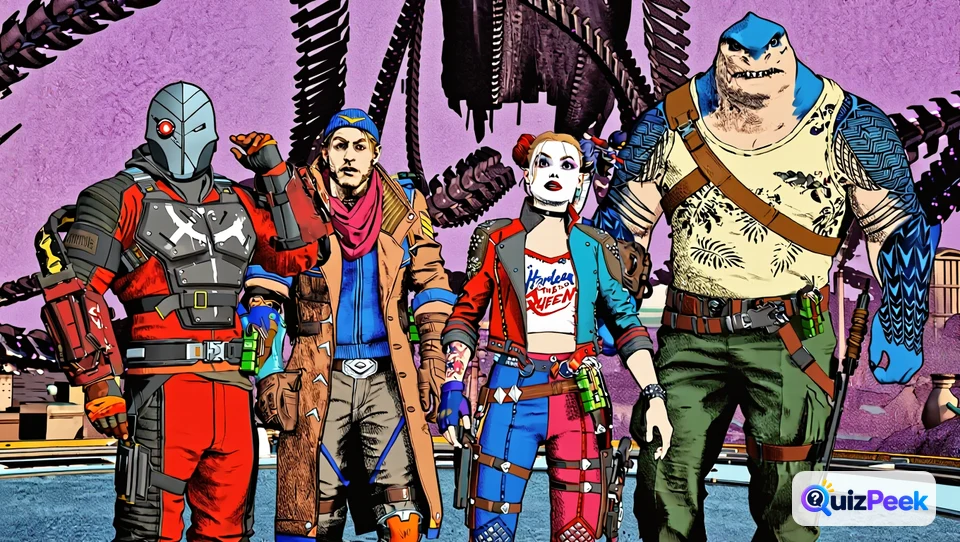
Which Suicide Squad Character Are You?
This quiz measures how you behave when a Suicide Squad mission turns sour: what you protect, what you use, and what you are willing to become useful for. Answer from inside the field, and you will get the character whose kind of pressure most resembles yours.
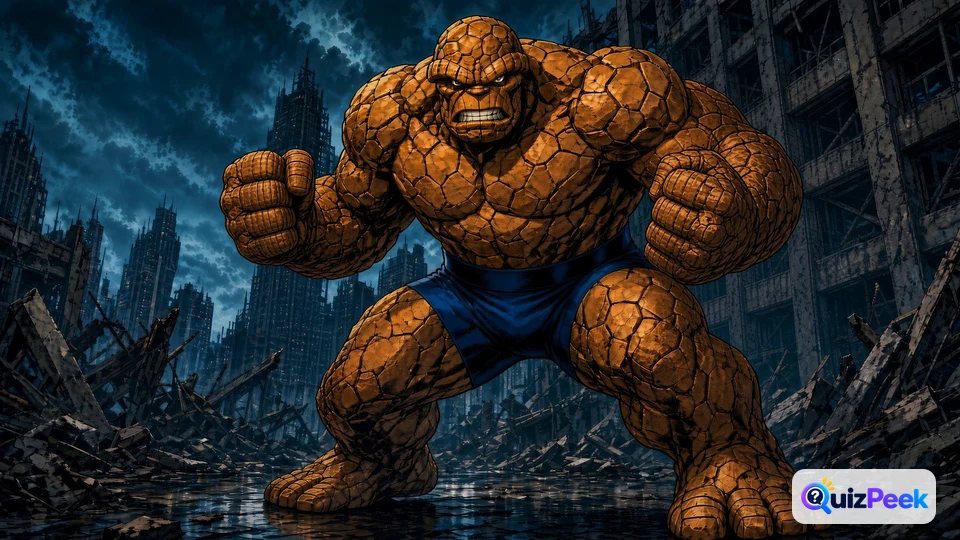
Which The Thing Character Are You?
This quiz measures how you act when The Thing’s Marvel New York turns into a rescue problem: who you protect, when you move, and how much planning you need before the pavement gives way. Your result matches you with a character whose habits fit your choices, including the part of that habit that may cost you.
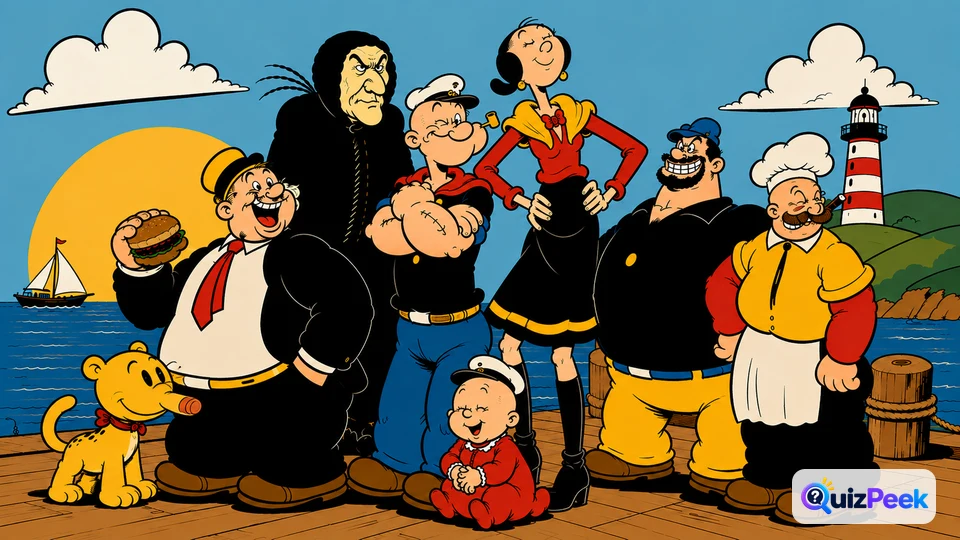
Which Popeye Character Are You?
This quiz drops you into Popeye's comic world of café quarrels, Oyl-family confusion, old rivalries, and suspicious errands. Choose what you would actually do, and your result points to the character whose habits most resemble yours.
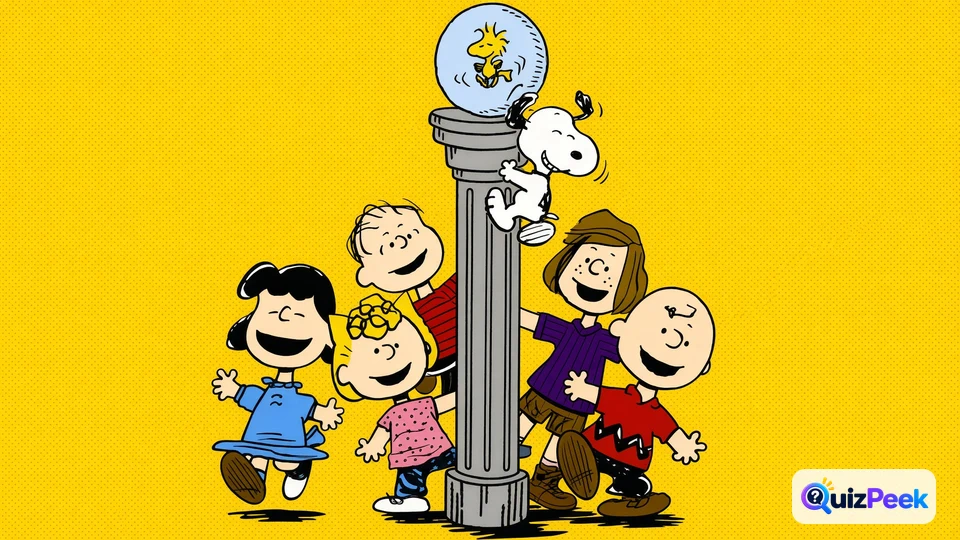
Which Peanuts Character Are You?
This quiz measures how you behave when Peanuts turns a small childhood problem into a moral weather system. Choose what you would actually do around Charlie Brown, Snoopy, Lucy, Linus, and the rest, and you will land on the character whose habits look most like yours.


