
Which Paw Patrol Character Are You?
This quiz measures how you behave when plans slide sideways, people need you, and a sensible afternoon becomes a small operational problem. Your result is the Paw Patrol character whose role best fits your habits under pressure.

About Paw Patrol
Paw Patrol is a running TVO animated series with 465 catalogued episodes. Its listed genres are comedy, action, and adventure, and the reference presents it as an ensemble piece with both main and supporting characters. The cast includes figures such as Ryder, Katie, Cap'n Turbot, Rubble, Zuma, Rocky, Marshall, Chase, and Skye, giving the quiz a range of roles to sort by behaviour rather than trivia.
How this quiz works
Answer 10 questions. There are no right or wrong answers — each choice adds points, and the result you get is the one your answers point to most.
10 questions · 8 possible results · about 3 minutes
Start the quizOne question at a time. Nothing is saved, and you can start over whenever you like.
Meet the characters from Paw Patrol
Every result below is a real ending of this quiz — read them before or after you play.

Ryder
Ryder appears in the reference cast as a main character in Paw Patrol, voiced by Owen Mason. In this quiz, Ryder stands for the person who converts noise into sequence: who is doing what, which step comes first, and what must not be forgotten.
He behaves like the ensemble’s organizing center rather than its loudest presence, keeping the action legible. You are the person who reaches for structure before sentiment has finished warming up. When a plan collapses, you ask for facts, divide the work, and give people jobs they can actually complete. You tend to notice dependencies: the call that has to be made before the errand, the tool that must arrive before the repair, the person who needs one plain sentence instead of six encouraging speeches. Ryder fits because your instinct is to turn confusion into an operating plan. The warning is that you can mistake management for understanding. If you assign roles too quickly, people may feel processed rather than heard, and the quiet emotional problem may survive the tidy checklist. Your best outcomes come when you leave room for someone else’s slower description before you draw the map.

Katie
Katie is listed as a main character in the Paw Patrol cast, voiced by Katherine Forrester. This quiz uses Katie as the result for practical attention to other people: checking who has been overlooked, lowering the temperature in a room, and making care visible through small actions.
Her behaviour here is patient, observant, and more concerned with repair than performance. You notice the human cost of a situation before the group has found polite language for it. In a rushed room, you check who has gone quiet, who is carrying too much, and what small task would make the next ten minutes less miserable. You do not need a dramatic assignment to be useful; you can stabilize things by listening, fetching, scheduling, cleaning, or simply staying. Katie fits because you treat responsibility as something close at hand, not as a speech about values. The downside is that this habit can make your own needs disappear under everyone else’s emergencies. You may say yes because it is easier than watching someone struggle, then discover later that you have built a life out of postponed preferences. Care works better when it includes a boundary you actually keep.

Cap'n Turbot
Cap'n Turbot is named as a main character in the reference, with Ron Pardo listed as voice actor. In this quiz, he represents curiosity that refuses to skip the strange part. He behaves like someone who studies the odd clue, checks the overlooked corner, and often finds the useful fact that faster people were ready to ignore.
You are drawn to the detail that does not fit. While other people rush to decide what kind of problem they are facing, you inspect the label, the noise, the weather, the pattern in the timing, or the story no one finished. You are good at turning an apparent distraction into evidence, and you would rather be slightly late than confidently wrong about the thing in front of you. Cap'n Turbot fits because your mind treats the world as something worth examining, not merely surviving. The warning is that curiosity can become a very elegant form of delay. You may follow a side path long after the main issue has asked for a simple answer, and your explanations can outgrow the patience of the room. Bring back a finding, not an entire expedition, when people are waiting.

Rubble
Rubble appears in the cast table as a main character, voiced by Devan Cohen. For this quiz, Rubble is the result for hands-on momentum: lifting the obvious burden, making a rough solution sturdy enough, and learning by contact with the problem.
His behaviour is practical and physical, less interested in theory than in whether the thing now holds. You solve problems by getting close enough to leave fingerprints. If something blocks the path, you move it; if a space cannot be used, you rearrange it; if everyone is still discussing options, you make the first workable version. You are often the person who turns an abstract intention into a table, a cleared doorway, a packed bag, or a patched-up arrangement that lets life continue. Rubble fits because you trust effort that can be seen, tested, and improved. The drawback is that you may start building before the question has been defined. A fast fix can become extra work when it solves yesterday’s version of the problem, and your willingness to carry weight can tempt others to let you carry theirs. Measure twice socially as well as physically.

Zuma
Zuma is recorded as a main character in Paw Patrol, voiced by Alex Thorne. This quiz treats Zuma as the person who keeps movement possible when others tighten up. He behaves by adjusting course, lowering the friction in a tense moment, and helping the group continue without turning every obstacle into a formal crisis.
You keep situations from becoming heavier than they need to be. When pressure rises, you change the route, soften the tone, and look for the opening that lets everyone keep moving. You are good at making a setback feel temporary: not by denying it, but by refusing to build a shrine around it. People often breathe more normally after you have entered the conversation. Zuma fits because your strength is adaptive motion. The risk is that ease can slide into avoidance. You may drift around conflict so gracefully that no one ever names the real problem, or you may underplay a deadline because panic seems unattractive. Calm is useful when it carries you toward a decision; it becomes costly when it merely helps everyone feel better about not making one.

Rocky
Rocky is listed as a main character, with Stuart Ralston given as voice actor. In this quiz, Rocky stands for resourceful repair: seeing what is already available, recovering value from the neglected item, and making a system function again without demanding ideal conditions.
His behaviour is inventive, economical, and attentive to overlooked materials. You rarely believe that a problem requires a perfect new beginning. You look in drawers, reuse yesterday’s notes, combine two half-solutions, and make an imperfect tool do one more useful thing. Where someone else sees clutter, you see inventory. You are at your best when limits are real, supplies are uneven, and the answer has to be assembled rather than ordered. Rocky fits because you can rescue value from what other people were ready to discard. The downside is that patching can become a reflex. You may keep broken arrangements alive long after replacement would be cleaner, or spend more energy preserving scraps than choosing a proper resource. Ingenuity is not the same as deprivation; sometimes the brave move is to stop repairing and ask for what is needed.

Marshall
Marshall is included in the reference as a supporting character, voiced by Gage Munroe. This quiz assigns Marshall to the person who answers trouble quickly and accepts a little mess in the process.
His behaviour here is immediate, public-spirited, and willing to recover from awkward starts rather than waiting for a flawless entrance. You move toward the problem while other people are still deciding how worried they are allowed to be. If someone drops something, freezes, or asks for help in a strained voice, you are already there with your hands full and a sentence half-formed. You may not make the smoothest arrival, but you make an arrival, and that matters when the room has become too cautious. Marshall fits because you treat urgency as a call to participate, not as a reason to protect your dignity. The warning is that speed can scatter debris of its own. You may rush past useful information, create a second small problem, or rely on charm and apology to clean up what planning might have prevented. Courage improves when it travels with a pause long enough to see the floor.

Chase
Chase appears in the cast table as a supporting character, voiced by Tristan Samuel. For the quiz, Chase represents order under pressure: checking the rule, setting the line, and making sure people know where they are supposed to stand.
His behaviour is procedural, alert, and oriented toward preventing confusion from spreading. You are the person who restores the shape of a situation. In a busy room, you look for exits, obligations, missing permissions, and the one instruction nobody has followed. You do not mind being the voice that asks people to slow down, sign in, move back, or repeat the plan. Your usefulness often lies in making the boundary visible before someone trips over it. Chase fits because you believe safety and fairness need structure, not vague goodwill. The downside is rigidity. You can become so focused on compliance that you miss context, embarrassment, or a better solution that does not fit the first rule you reached for. Order should protect the people involved; when it starts protecting itself, you may need to loosen your grip and listen.
More like this
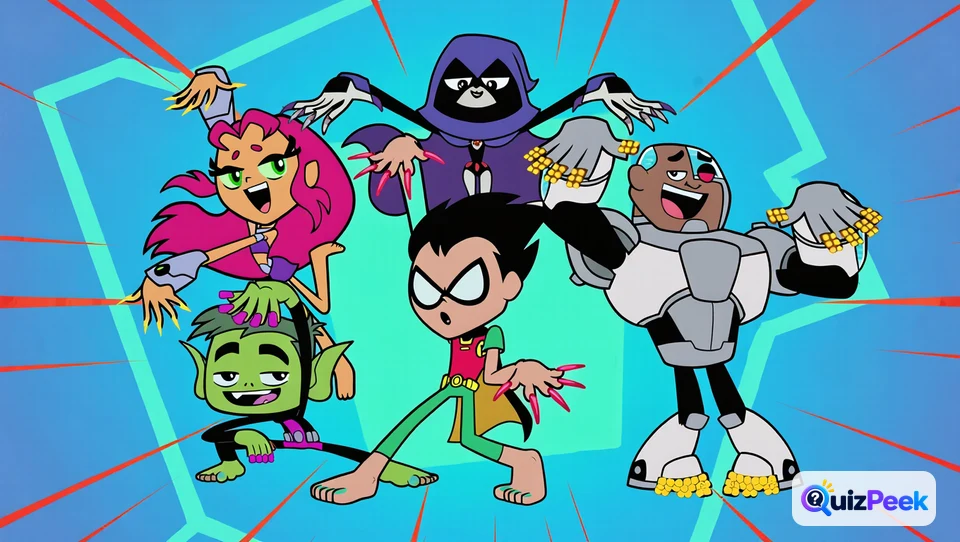
Which Teen Titans Go! Character Are You?
This quiz measures how you act when a small team is dropped into loud danger, malfunctioning gadgets, and arguments that have no respect for timing. Choose the move you would actually make, and you will land with Beast Boy, Cyborg, Robin, Raven, or Starfire.
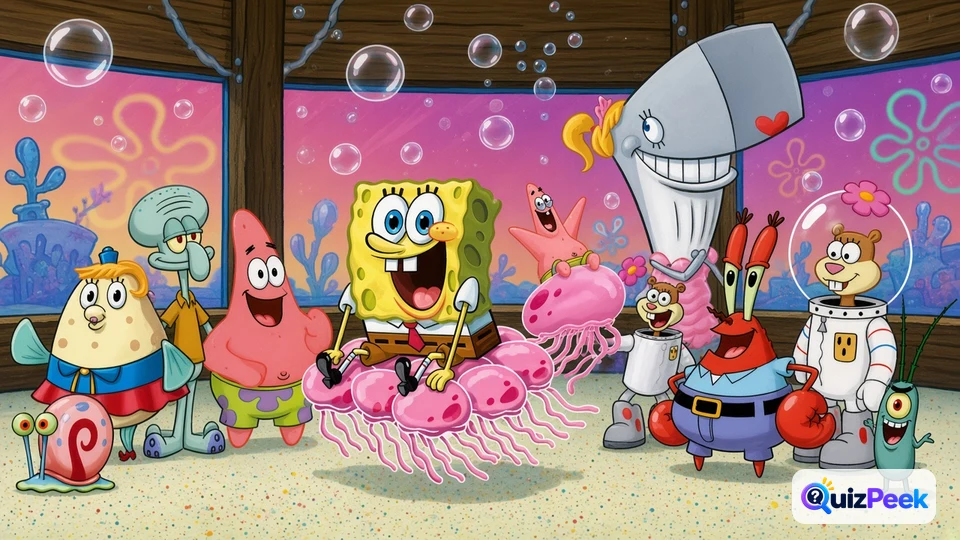
Which SpongeBob SquarePants Character Are You?
This quiz measures how you behave when SpongeBob SquarePants turns a small choice into an absurd expedition. Choose the action you would actually take, and you will be matched with one of eight recognizable characters.
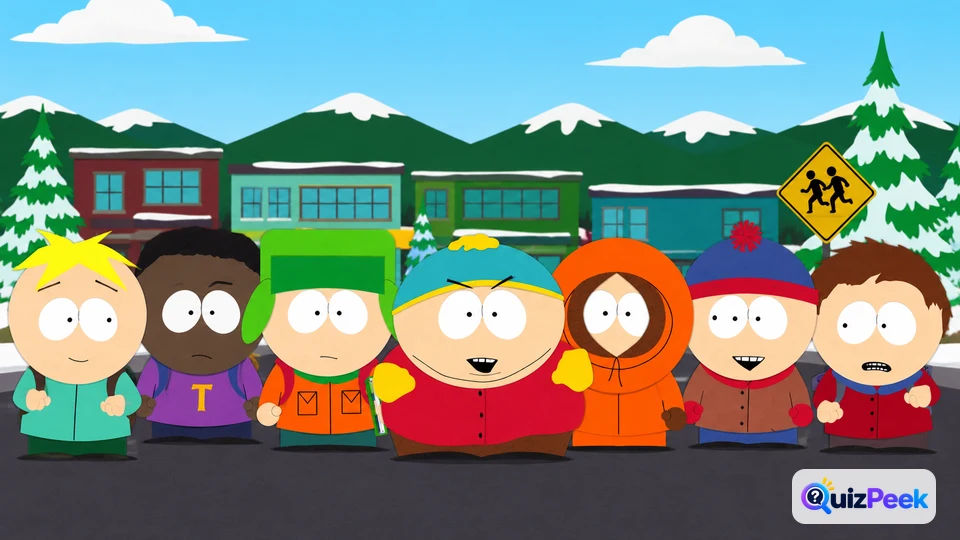
Which South Park Character Are You?
This quiz measures how you behave when ordinary life becomes a committee meeting with consequences. Choose the action you would actually take, and you will get the South Park character whose pattern of control, patience, loyalty or spectacle most closely matches yours.
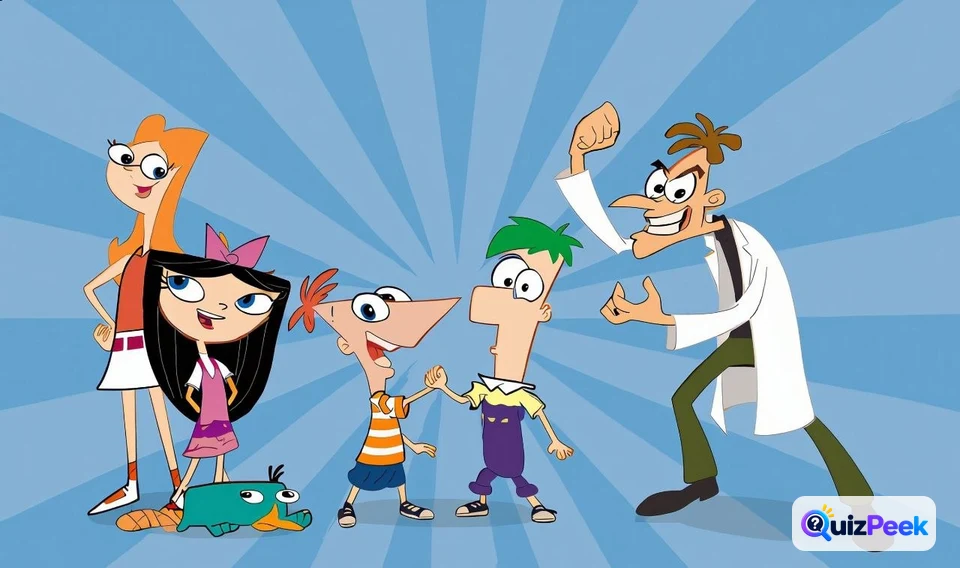
Which Phineas and Ferb Character Are You?
This quiz looks at how you handle plans, rules, interruptions, and the people who expect something from you. Choose the action you would actually take, and you will get one of eight Phineas and Ferb characters as a rough moral inconvenience.


