
Which Detective Conan Character Are You?
This quiz measures how you handle clues, loyalties, public danger, and the awkward business of needing help while looking as if you do not. Answer as if you have been dropped into Detective Conan’s mix of school corridors, police lines, conspiracies, and suspicious adults, and you will get the character whose habits most closely match yours.

About Detective Conan
Detective Conan is a TV anime that began in winter 1996 and remains releasing. It works across mystery, adventure, comedy, and psychological tension, following a cast pulled between school life, police work, private detection, criminal cases, and larger conspiracies. Its world makes room for age regression, espionage, fugitives, martial arts, football, and tragedy, while keeping the pleasure of deduction central: clues matter, pressure rises, and even ordinary places can become evidence.
How this quiz works
Answer 10 questions. There are no right or wrong answers — each choice adds points, and the result you get is the one your answers point to most.
10 questions · 6 possible results · about 3 minutes
Start the quizOne question at a time. Nothing is saved, and you can start over whenever you like.
Meet the characters from Detective Conan
Every result below is a real ending of this quiz — read them before or after you play.

Conan Edogawa
Conan Edogawa is the main figure of Detective Conan: outwardly a boy of six or seven, with the cast data also marking a seventeen-year-old identity as Shinichi. He belongs to a world built on detection, crime, and age regression.
He watches adults underestimate him, uses small openings, and treats every casual detail as something that might later convict or clear someone. You solve trouble by shrinking yourself into the gaps others overlook. You ask a simple question, let someone underestimate you, then keep the answer filed beside a footprint, a delay, or a change in tone. Under pressure, you prefer a narrow fact to a grand speech. You will use help, but you tend to arrange it quietly, so the right adult, officer, or friend reaches the conclusion without realizing how carefully you placed the road signs. Conan Edogawa fits you because the result is built around detection under disguise: seeing the case clearly while lacking the obvious authority to seize it. The downside is that secrecy can start to feel like good manners. You may protect people by withholding what they deserve to know, turn every conversation into evidence, and take risks because you trust your own reading of the room more than anyone else’s fear.

Ran Mouri
Ran Mouri is a sixteen-year-old main character at the heart of the school and family side of the cast. She moves through a crime-heavy world without turning every relationship into a puzzle.
Martial-arts and romance pressures surround her place in the ensemble: she protects, confronts, and keeps emotional obligations visible when detectives would rather talk only about evidence. You move first toward the person who might be hurt, blamed, or left behind. When a case breaks open, you notice the human damage before the clever pattern. You still act: you clear space, hold a witness steady, put your body between panic and someone vulnerable, and ask the question that makes people stop performing. You are not uninterested in clues; you simply refuse to treat care as an interruption. Ran Mouri fits you because she belongs to the school, romance, and martial-arts side of Detective Conan as much as to its crime scenes. The cost is that protection can become a trap. You may carry other people’s fear until it is heavier than the case itself, delay a necessary accusation because it will hurt, or forgive evasions that a cooler investigator would have pinned down sooner.

Kogorou Mouri
Kogorou Mouri is a thirty-seven-year-old main character and one of the adult faces of the detective side of the cast. He brings noise, public presence, and an instinct for taking up space around a case.
In a setting where police lines, witnesses, and comedy sit beside genuine danger, he often becomes the person everyone notices, whether or not that is convenient. You take command by making the room look at you. When police tape goes up or a witness begins to crumble, you speak in a voice that cuts through muttering and forces the scene to organize around a person. You can be useful simply by drawing heat away from someone smaller or quieter. Even your rough guesses can shake loose reactions that a patient interview would never get. Kogorou Mouri is the right match for your public, broad-shouldered way of handling pressure: cases sometimes need someone willing to stand where embarrassment, blame, and cameras gather. The flaw is not subtle. You can mistake volume for judgment, fall in love with your first explanation, and turn correction into a threat to your pride. A missed clue then becomes harder to admit than the original problem was to solve.

Kaito Kuroba
Kaito Kuroba is a seventeen-year-old supporting character whose presence suits Detective Conan’s appetite for disguise, spectacle, and crossover mischief. He behaves like someone who understands that a crowd can be managed as carefully as a clue.
While others press witnesses directly, he changes the angle of attention, making movement, timing, and presentation part of the contest. You work by changing where everyone is looking. If a corridor is blocked, you create a reason for the guard to glance left; if a suspect is stiff, you give them a stage on which to overact. You do not always confront trouble head-on. You prefer timing, props, borrowed attention, and a clean exit, especially when the serious thing can hide under something that looks almost frivolous. Kaito Kuroba is the natural match for that taste for misdirection, because his supporting role is most at home with spectacle and the crossover edge of this crime world. The risk is that performance can become a reflex rather than a tool. People may struggle to tell when you are sincere, and your clever diversion can leave allies confused, embarrassed, or forced to repair trust after the danger has passed.

Ai Haibara
Ai Haibara is a seven-to-eight-year-old supporting character, placed near Detective Conan’s colder themes of fugitives, conspiracy, and psychological danger. She behaves as if safety must be engineered before anyone earns the right to be reassured.
Her calm is not decorative; it is a way of measuring exits, motives, and the cost of trusting the wrong adult. You survive by reducing the number of ways a bad situation can reach you. Before you comfort anyone, you locate exits, decide who should know what, and notice the adult whose concern arrives too neatly. You are willing to seem cold if warmth would make people careless. In a crisis, you protect the group by narrowing choices, rationing information, and refusing the route that feels easiest. Ai Haibara belongs with your guarded method, since age regression, fugitives, conspiracy, and psychological danger make caution feel less like pessimism than arithmetic. The cost is real. You can treat trust as a security breach, mistake silence for strength, and keep allies outside the door until they stop knocking. Sometimes the safest plan leaves you unharmed but alone with everything you refused to say.

Heiji Hattori
Heiji Hattori is a supporting character strongly associated with the detective current of the cast. He handles a case by moving toward friction rather than around it, asking direct questions and forcing timelines into the open.
In a world of crime, police pressure, and teenage rivalry, he brings competitive urgency: if a clue is loose, he wants it tested now. You test a case by running straight at the contradiction. If a timeline wobbles, you make someone repeat it; if a witness hides behind rank, age, or politeness, you press until the weak joint shows. You are at your best when movement matters: splitting exits, racing a deadline, comparing alibis before the trail cools. Waiting politely for certainty feels like letting the culprit pack. Heiji Hattori suits your fast, confrontational approach: you bring heat, pace, and a willingness to challenge the room before the room is ready. The drawback is that urgency can turn into rough handling. You may make frightened people feel cross-examined, provoke suspects into chaos before proof is secure, or care more about winning the deduction than about what your allies can safely carry.
More like this
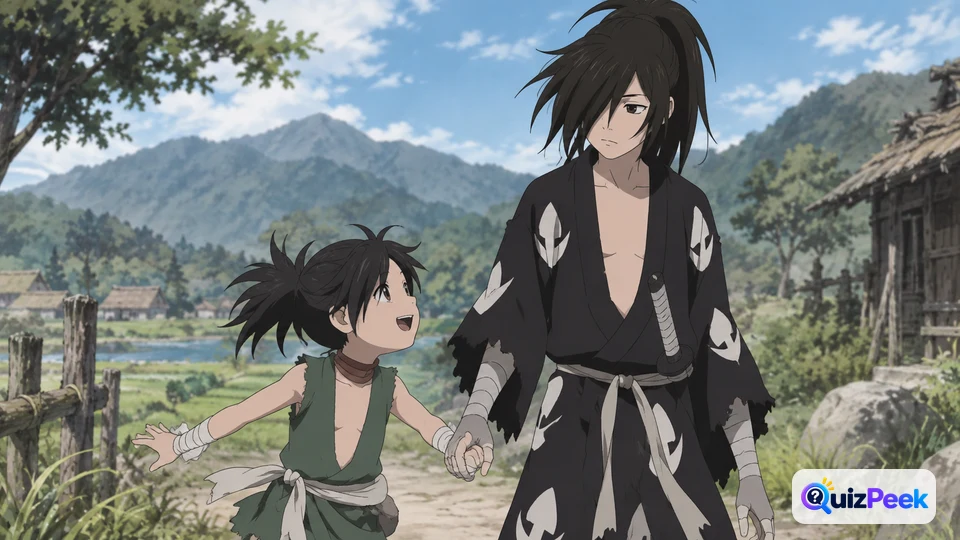
Which Dororo Character Are You?
This Dororo personality quiz measures how you move through cursed roads, ruined villages, and bargains no one should have made. Your choices weigh impulse, care, command, patience, and survival to match you with one of six characters.
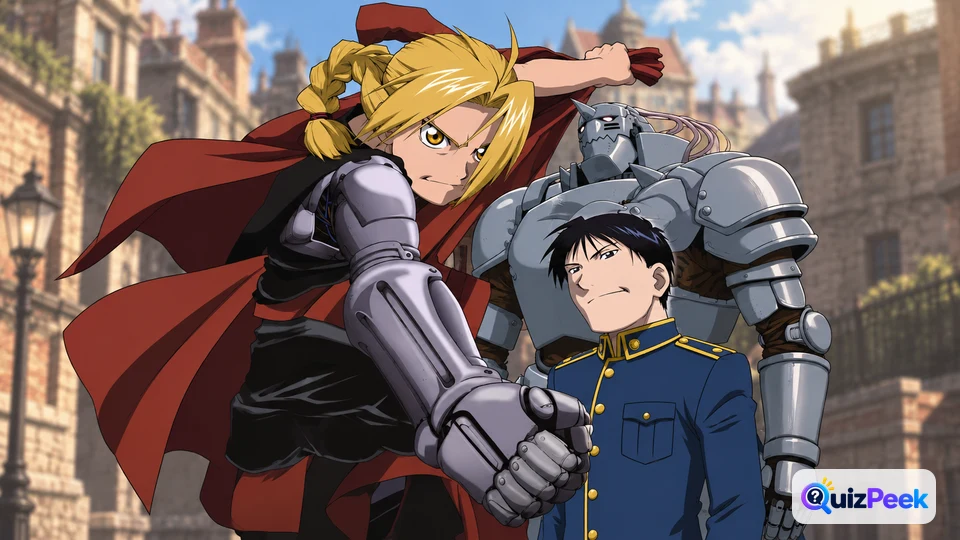
Which Fullmetal Alchemist Character Are You?
This quiz measures how you act when alchemy goes wrong, the military closes ranks, and the price of a journey starts landing on other people. Answer as you would inside that world, and you will land on the Fullmetal Alchemist character whose habits fit yours best.

Which Link Click Season 3 Character Are You?
This quiz measures the way you behave when pressure makes politeness expensive: who you protect, what you verify, and when you move. Answer by choosing the action you would actually take, and you will get the Link Click Season 3 character your habits most resemble.

Which Terror in Resonance Character Are You?
This quiz measures how you act when pressure narrows the room: whether you plan, investigate, protect, escalate, or disappear into the margins. Answer as you would behave, not as you would like to be advertised, and you will get the Terror in Resonance character closest to your instincts.


